


 RELEASE DATE
23.07.2026
 VALIDITY PERIOD
16.04.2026 > 31.12.2026
Map
Projected Map
Other Projections
.png)


Key
results
Population
estimates
Recommendations
& next steps
Acute
Malnutrition
Since the October 2025 ceasefire, large-scale assistance has driven improvements in food security and nutrition conditions across the Gaza Strip; however needs remain high.
The nutrition situation has improved considerably since early 2026, with all analysed governorates classified in IPC Acute Malnutrition (AMN) Phase 1 (Acceptable) between mid-April and June; and IPC AMN Phase 2 (Alert) in July - December 2026. Rafah was not analysed due to insufficient data.
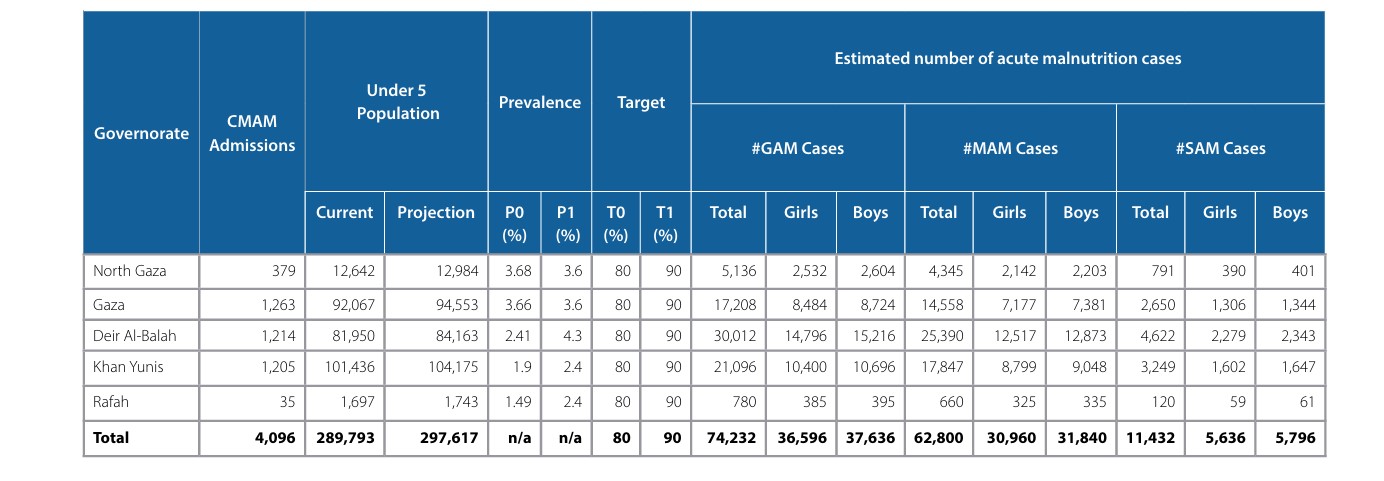
Acute malnutrition—particularly among children—has declined significantly, driven by a marked scale-up of nutrition programmes. Nevertheless, an estimated 74,200 children aged 6-59 months will likely require treatment for acute malnutrition through April 2027, with more than 11,400 severe cases expected. Adults continue to reduce their own food intake to prioritise their children. An estimated 24,600 pregnant and breastfeeding women are expected to suffer from acute malnutrition through April 2027.
Country Related Information
Contacts
- 16.04.2026 > 31.12.2026
Gaza Strip: Acute Food Insecurity Situation for 16 April - 30 June 2026 and Projection for 1 July - 31 December 2026 - 19.12.2025 > 30.04.2026
Gaza Strip: Acute Food Insecurity Situation for 16 October - 30 November 2025 and Projection for 1 December 2025 - 15 April 2026 - 18.12.2025 > 30.04.2026
Gaza Strip: Acute Malnutrition Situation for 16 October - 30 November 2025 and Projection for 1 December 2025 - 15 April 2026 - 01.07.2025 > 30.06.2026
Gaza Strip: Acute Malnutrition for 1 July - 15 August 2025 and Projection for 16 August - 30 September 2025 - 01.07.2025 > 30.09.2025
Gaza Strip: Acute Food Insecurity Situation for 1 July - 15 August 2025 and Projection for 16 August - 30 September 2025 - 01.04.2025 > 31.03.2026
Gaza Strip: Acute Malnutrition Situation for April 2025 - March 2026 - 01.04.2025 > 30.09.2025
Gaza Strip: Acute Food Insecurity Situation for 1 April - 10 May 2025 and Projection for 11 May - 30 September 2025 - 01.09.2024 > 30.04.2025
Gaza Strip: Acute Malnutrition Situation for September - October 2024 and Projection for November 2024 - April 2025 - 01.09.2024 > 30.04.2025
Gaza Strip: Acute Food Insecurity Situation for September - October 2024 and Projection for November 2024 - April 2025 - 01.05.2024 > 30.09.2024
Gaza Strip: Acute Food Insecurity Situation for 1 May - 15 June and Projection for 16 June - 30 September 2024 - 15.02.2024 > 15.07.2024
Gaza Strip: Acute Food Insecurity Situation for 15 February - 15 March 2024 and Projection for 16 March - 15 July 2024 - 24.11.2023 > 07.02.2024
Gaza Strip: Acute Food Insecurity Situation for 24 November - 7 December 2023 and Projection for 8 December 2023 - 7 February 2024

Join our mailing list