


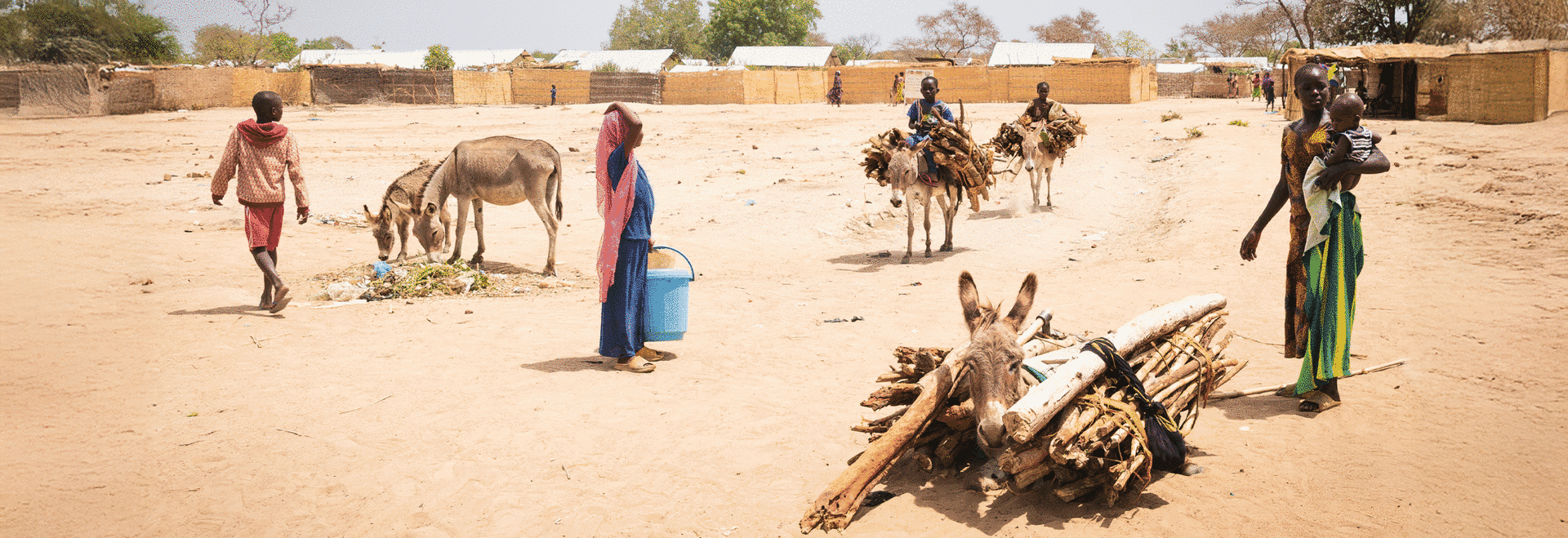
- Children use donkeys to carry wood in the Korsi refugee camp, near Birao in the Vakaga Prefecture, Central African Republic. ©UNFPA
Central African Republic: Nearly one in three people require urgent assistance as conflict, high prices, and flood risks constrain food access
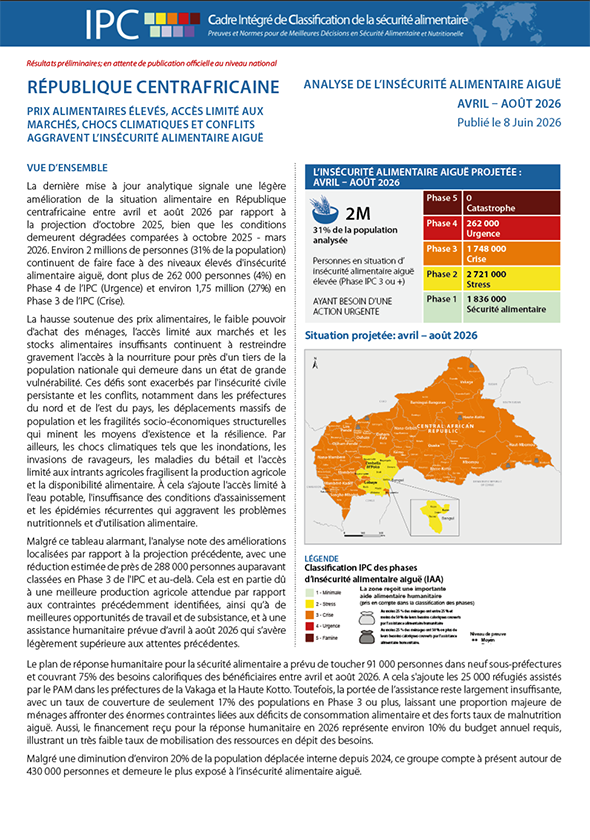
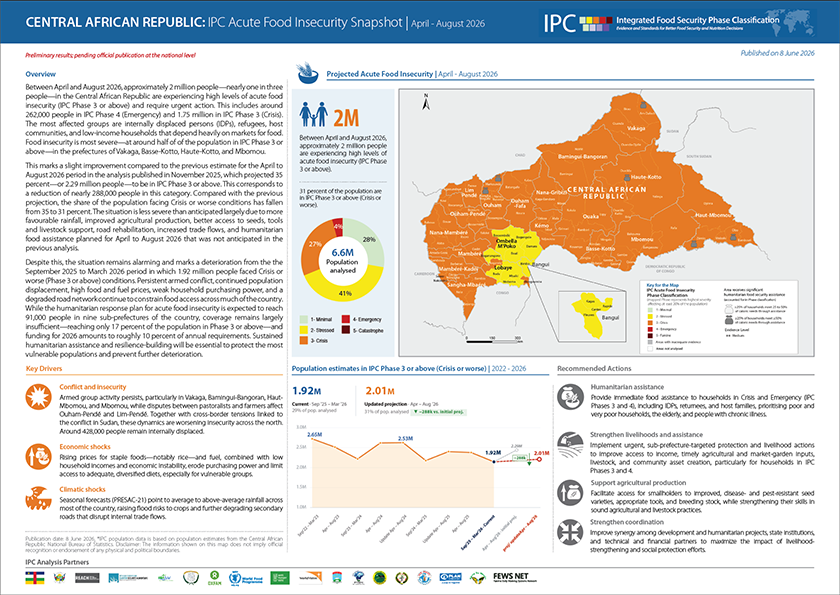
Between April and August 2026, over 2 million people—nearly one in three—in the Central African Republic are experiencing high levels of acute food insecurity (IPC Phase 3 or above), including 262,000 people in Emergency (IPC Phase 4). This marks a slight improvement compared to the previous estimate for the April to August 2026 period in the analysis published in November 2025, which projected 2.29 million people to be in IPC Phase 3 or above. This is due to better rainfall performance and stronger agricultural production, as well as the provision of humanitarian food assistance that was not anticipated in the previous analysis.
Despite this, the situation remains concerning and marks a deterioration from the September 2025 to March 2026 period in which 1.92 million people faced Crisis or worse (Phase 3 or above) conditions. Persistent armed conflict, continued population displacement, high food and fuel prices, weak household purchasing power, and a degraded road network continue to constrain food access across much of the country.
While the humanitarian response plan for acute food insecurity is expected to reach 91,000 people in nine sub-prefectures of the country, coverage remains largely insufficient—reaching only 17 percent of the population in Phase 3 or above—and funding for 2026 amounts to roughly 10 percent of annual requirements.
Join our mailing list