


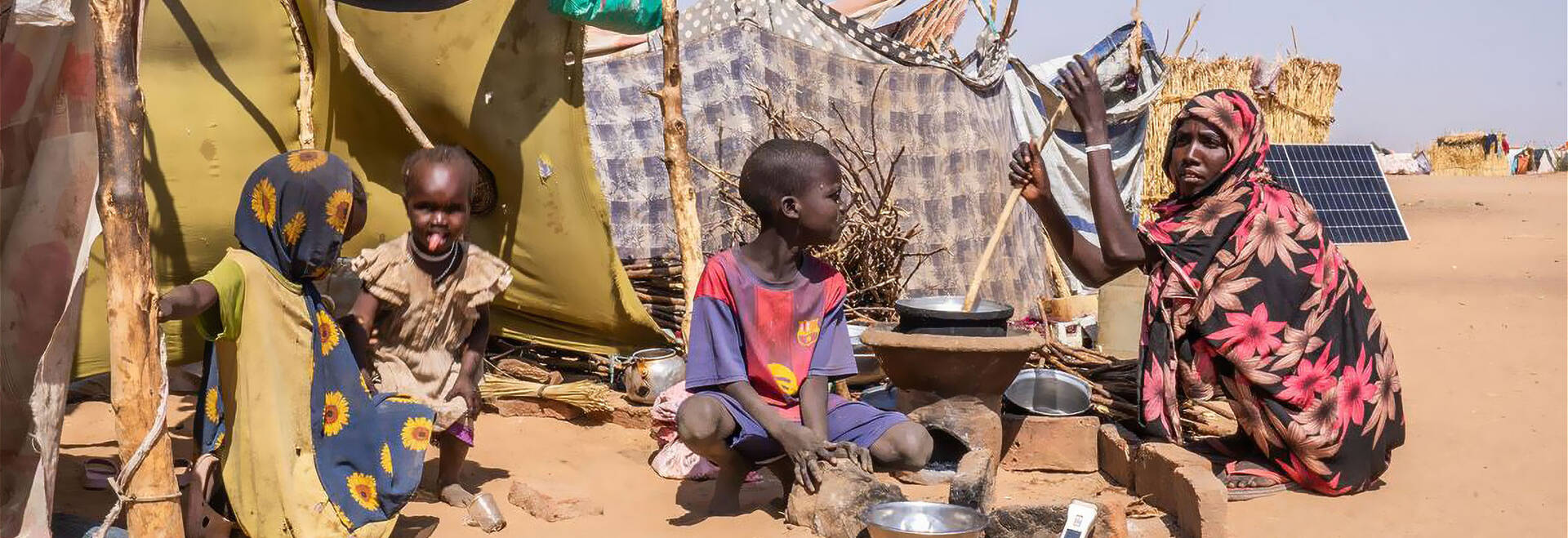
- Thousands of displaced people in makeshift camps in Tawila, North Darfur. ©UNICEF
SUDAN: Major food and nutrition crisis persists as conflict enters fourth year and risk of Famine looms
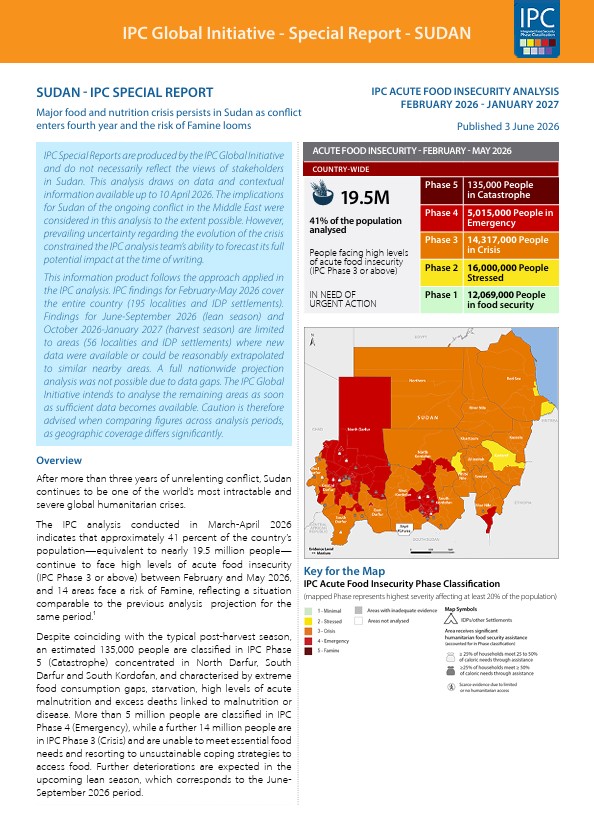
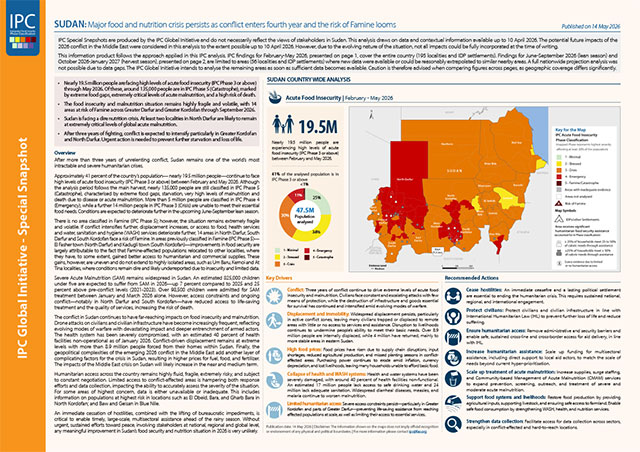
Sudan remains one of the world’s most severe humanitarian crises. Around 19.5 million people (41 percent of the population) are facing high levels of acute food insecurity (IPC Phase 3 or above) through May 2026. This includes 135,000 people classified in IPC Phase 5 (Catastrophe), characterised by extreme food gaps, starvation, very high levels of malnutrition, and death due to disease or acute malnutrition. More than 5 million people are classified in IPC Phase 4 (Emergency), while a further 14 million people are in IPC Phase 3 (Crisis). Conditions are expected to deteriorate further in the upcoming June–September lean season.
While no area is in Famine, 14 areas in North Darfur, South Darfur, and South Kordofan are at risk of Famine if conflict intensifies further, access to food worsens, health services and water, sanitation, and hygiene conditions deteriorate, or displacement increases.
Severe acute malnutrition is widespread, with an estimated 825,000 children affected in 2026 amid declining access to treatment.
Conflict continues to have far-reaching impacts on the food security and nutrition situation of the Sudanese people. More than 8.9 million people have been internally displaced, and an estimated 40 per cent of health facilities are non-operational.
The ongoing conflict in the Middle East adds another layer of complexity to the crisis in Sudan, contributing to higher prices for fuel, food, and fertilizer.
Humanitarian access remains highly constrained, limiting both response and data availability in some of the most affected areas.
Urgent action—cessation of hostilities, improved access, and scaled‑up assistance—is critical to prevent further deterioration. Otherwise, any meaningful improvement in Sudan’s food security and nutrition situation in 2026 is very unlikely.
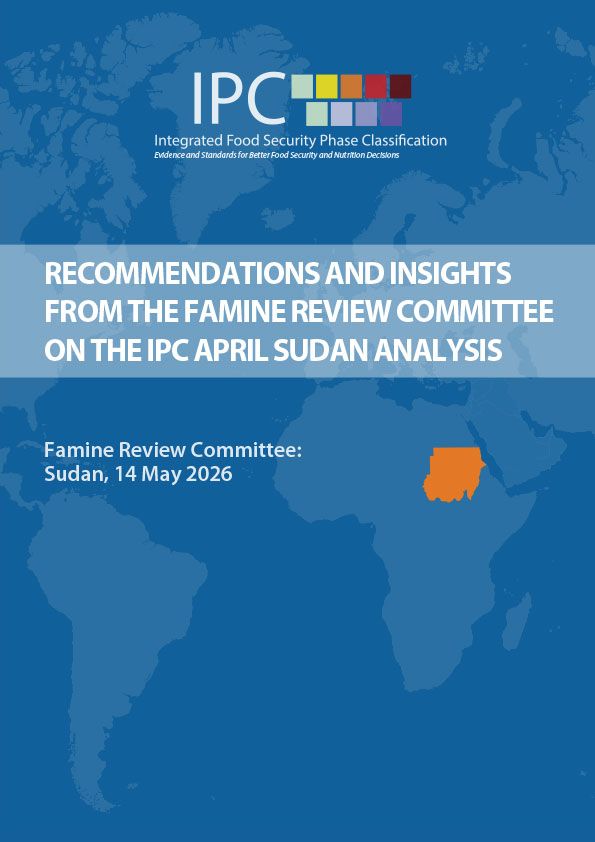
Recommendations and Insights from the Famine Review Committee on the IPC April Sudan Analysis
The FRC has reviewed the information used by the analysis team for the classifications made. In addition to the data made available at the time of the IPC analysis and the conclusions drawn by the analysis team, the FRC considered additional evidence it received subsequently, including information from key informant interviews. The purpose of the FRC recommendations and insights document is to highlight that the situation is still extremely concerning, not only due to displacements, but also from the systematic obstruction of food, health, water, and livelihoods in areas of active conflict.
The FRC is gravely concerned about the extremely dire situation across Sudan and especially about the outlook over the coming months in At Tina, Um Baru, and Kernoi localities in North Darfur.
Join our mailing list