


- Nyanko Kwang Makor Mayak in her emergency shelter in Malakal after fleeing violence in Bali County, Upper Nile State that killed her husband. With support from the South Sudan Humanitarian Fund through Plan International and its partner Humanitarian Development Consortium, she now has a safer place to stay, though food and income remain critical challenges. © OCHA
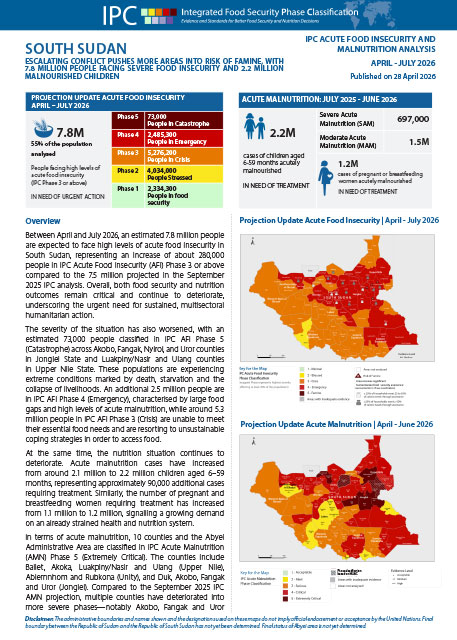
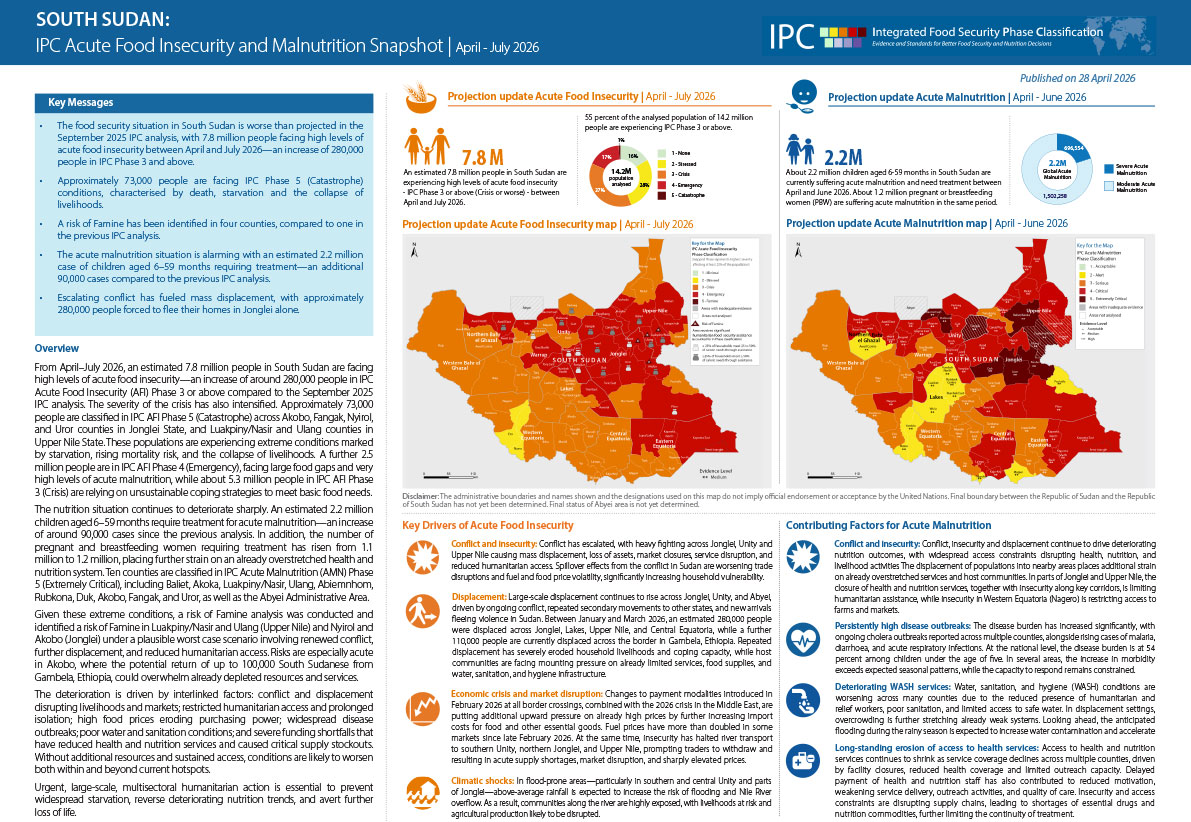
SOUTH SUDAN: Rising conflict heightens Famine risk, with 7.8 million people facing severe food insecurity and 2.2 million malnourished children
An estimated 7.8 million people in South Sudan are expected to face high levels of acute food insecurity between April and July 2026. This marks an increase of around 280,000 people in IPC AFI Phase 3 or above compared to the September 2025 IPC analysis. This includes approximately 73,000 people in IPC AFI Phase 5 (Catastrophe) who are experiencing extreme conditions marked by starvation, a rising risk of death, and the collapse of livelihoods. A further 2.5 million people are in IPC Phase 4 (Emergency), facing large food gaps and very high levels of acute malnutrition, while about 5.3 million people in IPC Phase 3 (Crisis) are relying on unsustainable coping strategies to meet basic food needs.
The nutrition situation has also deteriorated sharply, with an estimated 2.2 million children aged 6–59 months requiring treatment for acute malnutrition which is an increase of around 90,000 cases since the previous analysis. The number of pregnant and breastfeeding women requiring treatment has also risen from 1.1 million to 1.2 million.
Given these extreme conditions, a risk of Famine analysis was conducted and identified a risk of Famine in Luakpiny/Nasir and Ulang (Upper Nile) and Nyirol and Akobo (Jonglei) with the risks especially acute in Akobo.
A combination of interlinked factors is driving the situation, including conflict and displacement disrupting livelihoods and markets; restricted humanitarian access and prolonged isolation; high food prices eroding purchasing power; widespread disease outbreaks; poor water and sanitation conditions; and severe funding shortfalls that have reduced health and nutrition services and caused stockouts of critical supplies.
Join our mailing list