


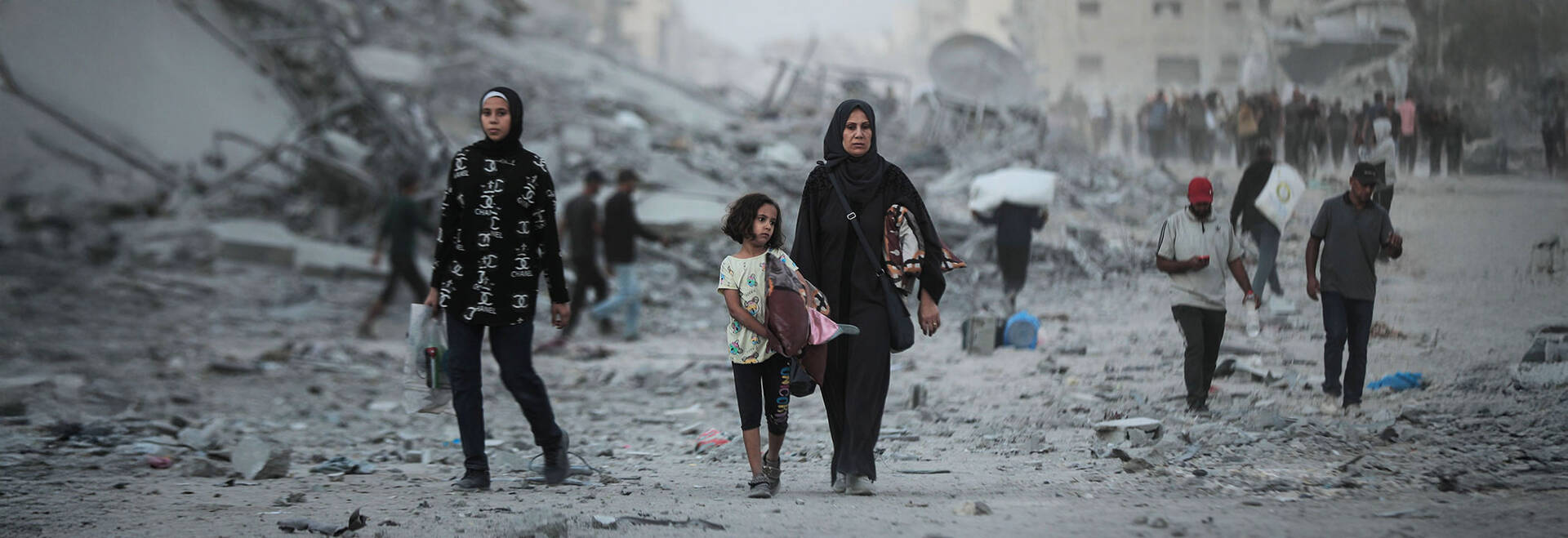
- © UNICEF
GAZA STRIP: Famine conditions offset, but situation remains critical
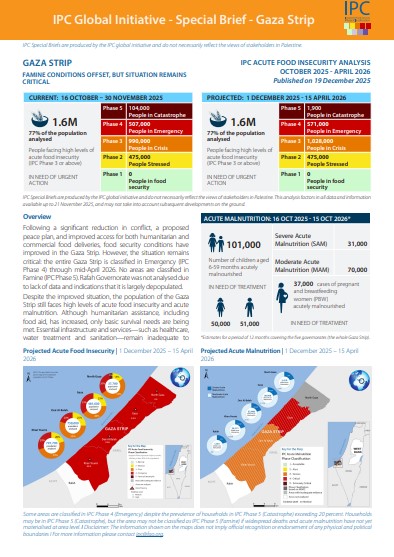
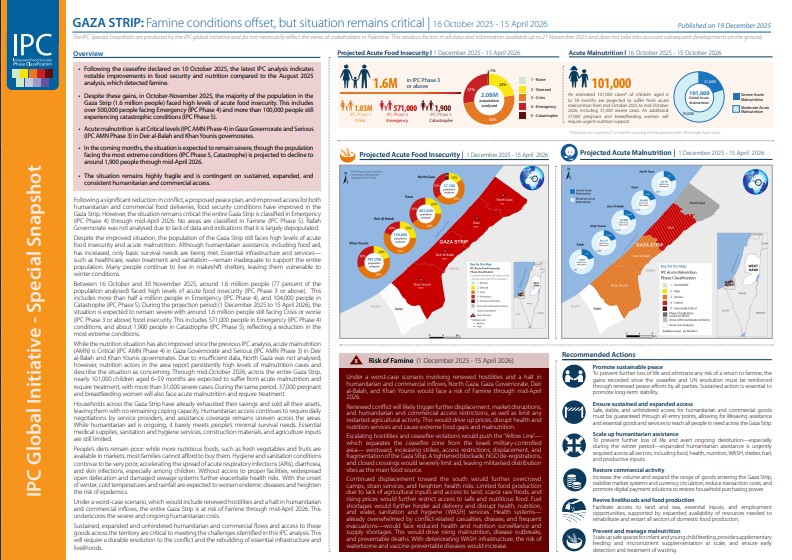
Following the ceasefire declared on 10 October 2025, food security and nutrition have improved in the Gaza Strip compared to the August 2025 analysis, which detected Famine.
Despite these improvements, in October-November 2025, the majority of the population continued to face high levels of acute food insecurity, including over 500,000 people facing Emergency (IPC Phase 4) and more than 100,000 experiencing Catastrophe (IPC Phase 5). Further, acute malnutrition is at Critical levels (IPC AMN Phase 4) in Gaza Governorate and Serious (IPC AMN Phase 3) in Deir al-Balah and Khan Younis governorates.
In the coming months, the situation is expected to remain severe, though the population facing the most extreme conditions, classified in IPC Phase 5 (Catastrophe), is projected to decline to around 1,900 people through mid-April 2026.
Under a worst-case scenario, which would include renewed hostilities and a halt in humanitarian and commercial inflows, the entire Gaza Strip is at risk of Famine through mid-April 2026.
The situation remains highly fragile and is contingent on sustained, expanded, and consistent humanitarian and commercial access.
Page 2 of the IPC Special Snapshot and pages 3 and 5 of the IPC Special Report have been amended on 19 December after publication to rectify the reported number of fatalities since the ceasefire. These corrections do not alter the overall findings or recommendations of the report.
Additional Considerations from the Famine Review Committee Relating to IPC Analyses for the Gaza Strip
The Famine Review Committee (FRC) provides additional considerations on recent developments and claims about their August 2025 analysis and classification.
Download the FRC Statement
Join our mailing list